As we commemorate International Day of the Girl 2025 under the theme “The girl I am, the change I lead: Girls on the frontlines of crisis”, we’re celebrating girls’ advocates who stand with and for girls every day. We asked Gladys Njeri from Her Voice Matters six powerful questions about her journey, vision and hopes for girls everywhere. Here’s what she had to say:
- What does this year’s theme – “The girl I am, the change I lead: Girls on the frontlines of crisis” – mean to you personally and in your advocacy work?
For me, this theme is not just a statement, it’s a lived reality. Growing up while facing school fees struggles and watching girls undergo period poverty planted the dream of one day starting an initiative for girls. That dream became Her Voice Matters, where I now mentor girls in informal settlements like Kibra, Huruma, and Mathare, supporting them to turn crises like stigma, lack of resources, and low confidence into leadership and resilience. At the same time, my advocacy journey with She’s The First has allowed me to take this advocacy global, showing me the power of collective girl leadership. Most importantly, I am a product of mentorship myself, a community of women believed in me and shaped me and that motivates me to pay it forward so that no girl walks alone. From a girl once dreaming of change, to leading in both local and global spaces, I have seen first-hand that girls are not only on the frontlines of crisis, but also on the frontlines of change.
2. Why did you start your initiative, and how does it empower or support girls
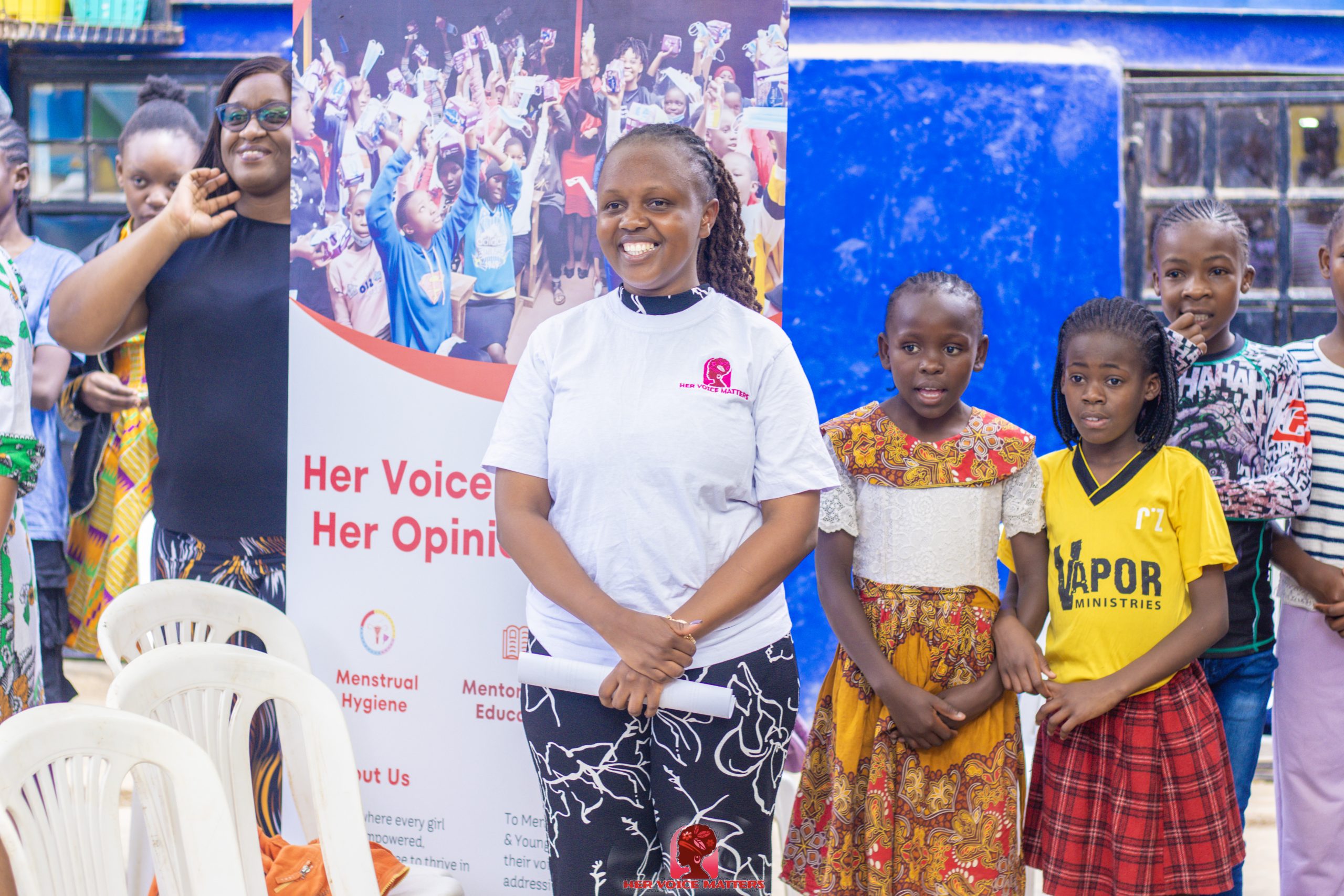
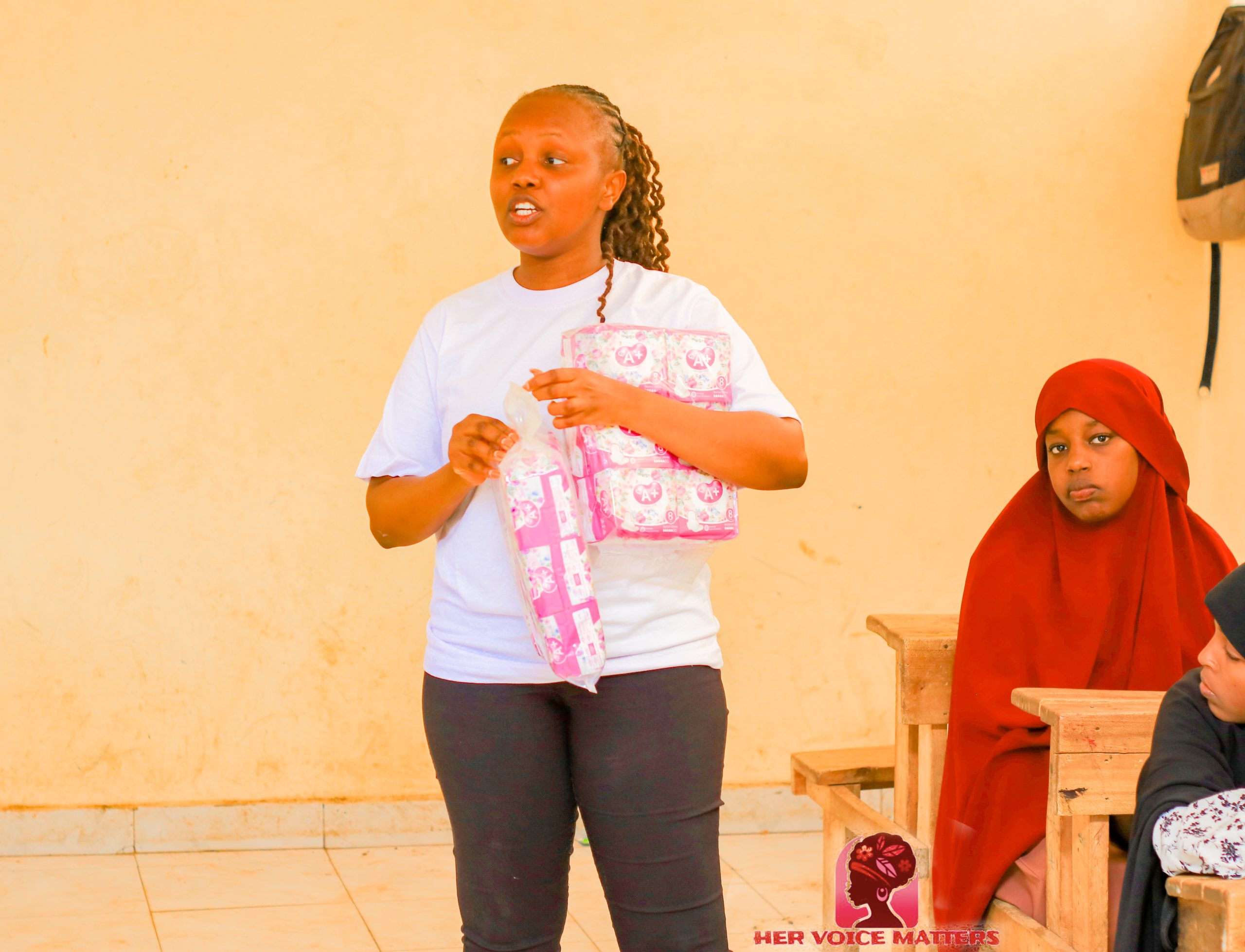
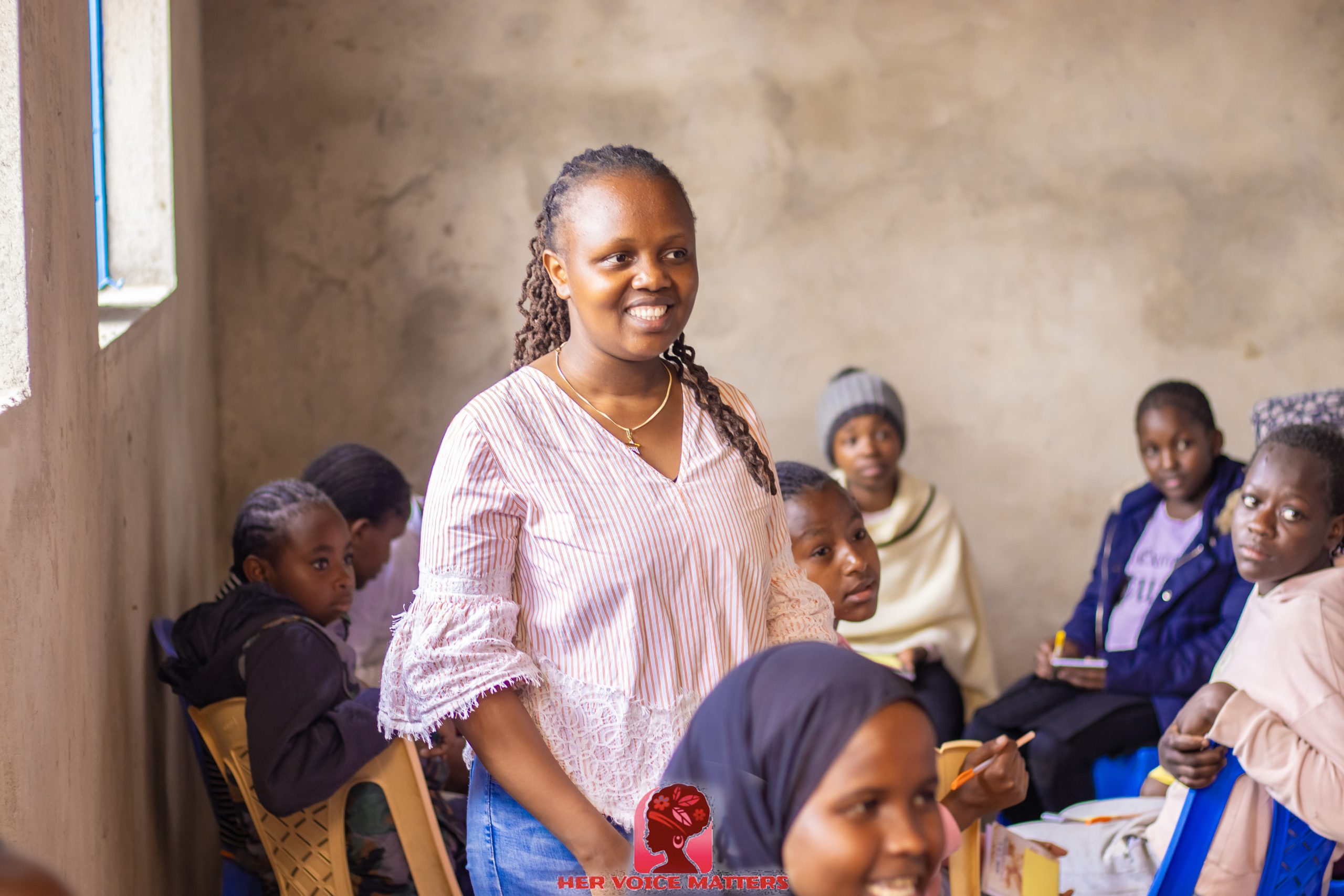
The dream for Her Voice Matters started in high school, when I watched classmates lose confidence because they couldn’t access pads. I promised that one day I would create an initiative so that girls wouldn’t have to choose between dignity and education. That dream came alive in 2021 with our first pads drive in Kibra, which reached over 300 pupils and proved that the idea could become a reality. Today, Her Voice Matters empowers girls aged 9–17 in informal settlements through structured mentorship that blends menstrual health and SRHR education, confidence and leadership building, and mental health support. In safe, girls-only spaces, we help girls confront stigma, discover their strengths, and grow into leaders. Since then, we’ve mentored over 200 girls across Kibra, Huruma, and Mathare, with each session leaving a ripple effect, girls teaching peers and even shifting school communities. Partnerships, like with Pointters Community Initiative (2021) and She’s The First, have also enabled us to expand reach and impact. Our name reflects our slogan, “Her Voice is Powerful, Her Opinion Matters” because at the core of our work is the belief that when a girl speaks, the world must listen.
3. What is one story of impact from your work with girls that inspires you most?
One of the most inspiring stories for me comes from Savior King Education Centre in Kibra, where Her Voice Matters held its first mentorship and pads-drive in 2021. At the time, many of the girls were shy, battling stigma, and struggling to believe in their own potential. Through consistent mentorship, combining menstrual health education, confidence-building activities, and safe spaces for open conversations, we saw a remarkable transformation. Several of those girls have since completed primary school and earned places in national and extra-county schools. For me, this is powerful proof that when you give girls dignity, knowledge, and mentorship, you don’t just change their day-to-day lives, you unlock futures that once felt out of reach. Watching these girls’ step into the next stage of education with confidence and ambition continues to inspire me and fuels our commitment to reach even more girls in Kibra, Huruma, and Mathare.
4. If you could paint a picture of the future, what do you envision for the girls you work with?
I envision a future where every girl has access not only to education but also to mentorship that nurtures her voice and leadership. Through Her Voice Matters, I see girls in Kibra, Huruma and Mathare growing up free from menstrual stigma, equipped with confidence, and stepping boldly into leadership roles in their schools and communities. These girls will not only finish school but return as mentors themselves, creating a cycle of empowerment. At the same time, my advocacy gives me a global lens. I dream of a world where girls everywhere, whether in Kenya or across the globe are recognized as leaders on the frontlines of crisis, and their voices are central in shaping policies, movements and solutions. This vision is deeply personal because I am a product of mentorship. A community of women believed in me, shaped me, and gave me the courage to lead. I am forever grateful to these women whose guidance helped me see my role on a global stage, and mentors who constantly challenge and affirm me. My dream is for the girls I work with to experience the same support, that no girl walks alone and each is equipped to rise and to lead.
5. What is one pressing issue facing girls in Kenya that you believe we must urgently address?
One of the most pressing issues facing girls in Kenya is menstrual inequity, where lack of access to products, stigma and silence around menstruation still force girls out of school and make them vulnerable to exploitation. At Her Voice Matters, we’ve seen this first-hand: girls missing class, others exposed to #SexForPads and teenage pregnancies rising as a result of unmet basic needs. Pads alone are not the solution. Girls need mentorship, accurate SRHR education and safe spaces where they can build resilience to navigate these challenges. Through my work with She’s The First, I’ve also learned that this is not unique to Kenya, girls everywhere face overlapping crises.
But one truth stands out: girls know firsthand their problems and what they want. That’s why girls must be incorporated into changemaking programming not just as beneficiaries, but as equal partners shaping solutions. When we put their voices at the center, we design responses that are not only relevant but also transformative.
The urgent task is clear, address menstrual inequity holistically, tackle harmful practices like #SexForPads, and ensure girls are recognized as the leaders they already are.
6. What message of encouragement or call to action would you share with girls and allies on this International Day of the Girl?
To every girl: you are not defined by the crises you face, but by the strength you carry and the change you lead. I know this because I was once that girl who was dreaming of a different future. Mentorship and the support of women who believed in me transformed that dream into reality. Today, through Her Voice Matters, I walk alongside girls in Kibra, Huruma, and Mathare, mentoring them to find their voices and step boldly into leadership. My advocacy journey has shown me that this story is global, girls everywhere might be on the frontlines of crisis, but also on that of change.
To allies: invest in girls. Support girl-led spaces, fund mentorship and include girls in decision-making. Girls know best their problems and what they need. When we amplify their voices and resource their leadership, we create a world that is not only equal but hopeful, for everyone. Because at the end of the day: Her Voice is Powerful, Her Opinion Matters.